404. Sum of Left Leaves Easy
Given the root of a binary tree, return the sum of all left leaves.
A leaf is a node with no children. A left leaf is a leaf that is the left child of another node.
Example 1:
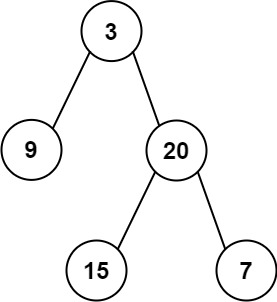
Input: root = [3,9,20,null,null,15,7]
Output: 24
Explanation: There are two left leaves in the binary tree, with values 9 and 15 respectively.
Example 2:
Input: root = [1]
Output: 0
Approach
Input: The root node of a binary tree root
Output: Return the sum of all left leaves
This problem belongs to Binary Tree Traversal problems.
We can pass down an indicator of whether it's the left subtree during the traversal of the binary tree, and then determine if it's a leaf node.
If it meets both the condition of being a left subtree and a leaf node, we return the value of the current node; otherwise, return 0.
Finally, adding the sums from the left and right subtrees filters out the sum of the left leaves.
Implementation
class Solution:
    def sumOfLeftLeaves(self, root: Optional[TreeNode]) -> int:
        def dfs(node: Optional[TreeNode], is_left: bool) -> int:
            if node is None:
                return 0  # Return 0 directly for empty node

            # If it is a leaf node
            if not node.left and not node.right:
                return node.val if is_left else 0

            # Left subtree recursion (marked as a left child node)
            left_sum = dfs(node.left, True)
            # Right subtree recursion (marked as a right child node)
            right_sum = dfs(node.right, False)

            return left_sum + right_sum

return dfs(root, False)/**
* @param {TreeNode} root
* @return {number}
*/
var sumOfLeftLeaves = function(root) {
function dfs(node, isLeft) {
if (!node) return 0;
if (!node.left && !node.right)
return isLeft ? node.val : 0;
return dfs(node.left, true) + dfs(node.right, false);
}
return dfs(root, false);
};Complexity Analysis
- Time Complexity:
O(n) - Space Complexity:
O(h)